
Not All Wheel Damage Is the Same
A damaged wheel might look minor at first glance—just a scuff, a slight bend, maybe a slow air leak. But what you see on the surface doesn’t always reflect what’s happening structurally. The difference between a safe repair and a dangerous one typically depends on factors the average driver can’t detect without help.
Bends, cracks, corrosion, and impact fatigue affect wheels in different ways. Some damage can be repaired safely and restore full performance. Other times, the best decision is to replace the wheel entirely—especially when long-term safety is at stake.
In this article:
What Can Usually Be Repaired Safely?
Steel Wheels
Steel wheels are known for their strength and flexibility. In most cases, a bent steel rim can be straightened and returned to service without compromising safety. Repairing a bent steel wheel requires specialized equipment that realigns the structure and restores balance without compromising the material’s strength.
Light corrosion or surface rust can also be addressed. With proper treatment and refinishing, steel wheels can continue performing under tough conditions for years—even in high-mileage or off-road environments.
Alloy Wheels
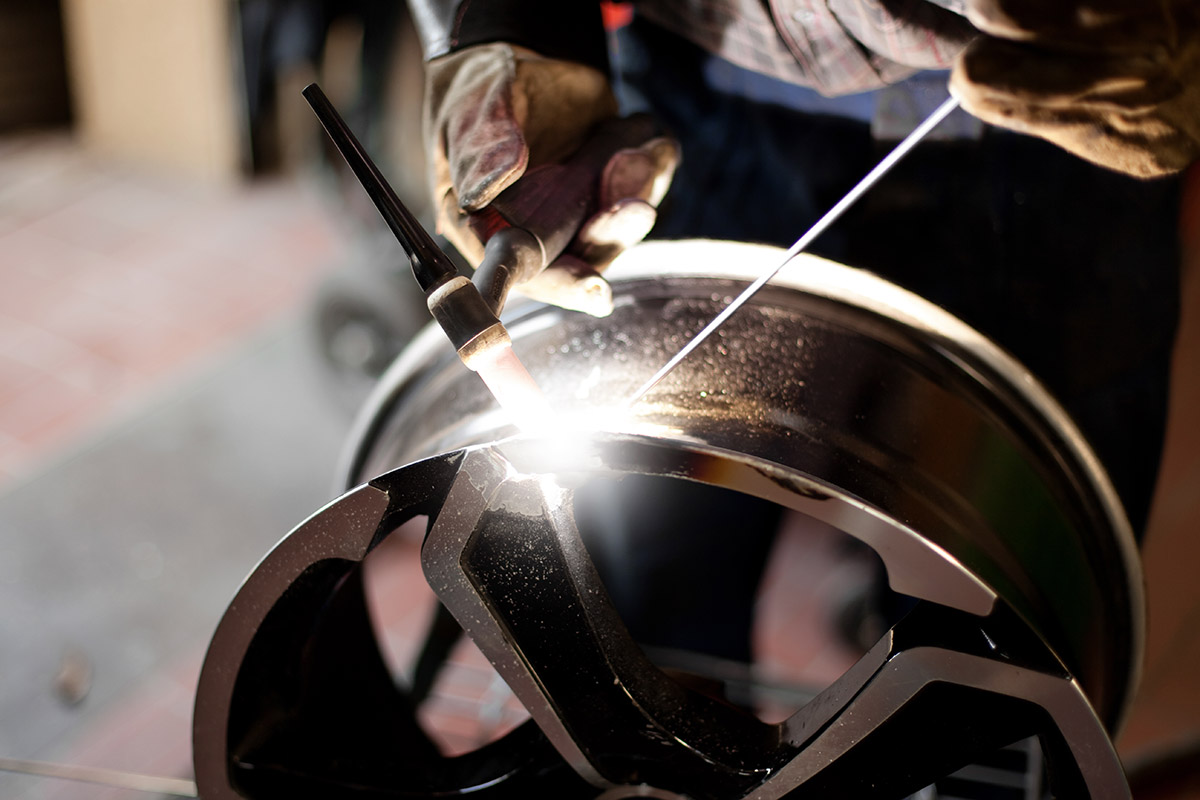
Repairs to alloy wheels are more limited. Minor curb rash, cosmetic scrapes, and clear coat issues can usually be corrected with refinishing or polishing. However, once structural damage is involved—especially cracks—repair becomes questionable.
Unlike steel, alloy wheels don’t bend easily. They’re more likely to fracture under impact, and those fractures can spread over time even if they’re not immediately visible. For that reason, most structural repairs on alloy wheels are considered temporary at best.
Signs That Point to Replacement—Not a Fix
When the wrong repair is made, or when a damaged wheel isn’t replaced soon enough, the consequences can show up unexpectedly—on the highway, during a sharp turn, or under braking stress. That’s why it pays to recognize the warning signs early.
Replace the Wheel If You Notice:
- Visible Cracks or Fractures: Cracks near the spokes or around the hub are clear signs of structural compromise, and they can spread under pressure until the wheel fails completely.
- Severe Deformation: A wheel that has been bent out of round—especially if it won’t hold a consistent bead with the tire—shouldn’t be forced back into shape.
- Recurring Air Leaks: If you’re refilling your tire more than once a week and can’t find a puncture, the wheel may be warped or have micro-fractures.
- Vibration at Highway Speeds: Wheel imbalance can be caused by prior impact or poor repair. If balancing doesn’t solve the problem, there may be underlying damage.
- Rust or Corrosion Near Structural Areas: Surface rust isn’t a dealbreaker, but deep corrosion around the bead seat, valve stem, or lug holes compromises the wheel’s strength.
If you’re unsure, a qualified shop can inspect the wheel and give you a straight answer—based not just on how it looks, but how it will perform under real stress.
What Shops Look for During an Evaluation
A proper wheel inspection goes beyond aesthetics. Shops that specialize in wheel repair—like Stockton Wheel—evaluate each part of the structure and ask questions about how the damage occurred, how the vehicle is used, and what the driver needs from the repair.
Technicians typically check:
- The bead seat: Where the tire seals with the rim
- The barrel: The outer structure that takes most of the stress
- The hub contact area: Where alignment and balance matter most
- The spoke structure: Especially on alloys, where cracking can start
- Signs of previous damage or repair: Including grinding marks, weld points, or hidden patches
That evaluation helps determine whether a repair is truly restoring integrity—or just masking a problem.
Why Unsafe Repairs Can Make Things Worse
A wheel that’s improperly repaired doesn’t just risk breaking again—it can create alignment problems, shorten tire life, and make the vehicle harder to control at speed.
Wheels carry the entire load of the vehicle. When one is weakened or poorly balanced, stress transfers elsewhere—into the suspension, the steering, or the tires. Over time, that adds up to unpredictable handling or even catastrophic failure.
In some personal injury cases, a prior wheel repair that didn’t meet safety standards has been investigated as a contributing factor. Whether it’s a welded crack on an alloy wheel or an unbalanced rim that caused steering drift, unsafe repairs can become part of the crash story.
If a car crash leads to injury and there’s evidence that a prior repair or component failure played a part, that detail can factor into how a car accident claim is evaluated.
Repair or Replace? Use This Quick Checklist
To help you decide whether to repair or replace, here’s a comparison of situations where each choice makes the most sense:
| Condition | Repairable | Replace |
| Light curb rash | ✅ | |
| Minor bend on steel wheel | ✅ | |
| Crack in alloy wheel | ✅ | |
| Wheel won’t balance after multiple tries | ✅ | |
| Air leak from valve stem area | ✅ (if no cracks) | |
| Air leak from wheel structure | ✅ | |
| Corrosion around lug holes | ✅ | |
| Cosmetic clear coat damage | ✅ | |
| Previous repair failed | ✅ |
You can use this as a starting point—then have a qualified technician take a closer look.
How to Tell When a Shop Is Giving You the Right Advice
A trustworthy wheel repair shop doesn’t push one-size-fits-all solutions. They’ll ask:
- How the damage happened
- Whether the wheel has been repaired before
- What kind of driving you do (city, highway, off-road, heavy load, etc.)
- Whether you’ve noticed handling or vibration issues
You should feel confident asking for photos, explanations, or a walkthrough of the inspection findings. If the shop avoids your questions, recommends repair before inspection, or focuses only on saving money—not safety—it’s worth getting a second opinion.
Stockton Wheel has worked with everyone from classic car enthusiasts to commercial operators. And the same principle applies across the board: if a repair won’t hold up under real-world conditions, they won’t recommend it.
Don’t Let the Wrong Call Cost You Later
Replacing a wheel costs money. But that cost is nothing compared to the price of a tire blowout, steering failure, or compromised handling at speed. The wheel is part of your safety system—just like your brakes or tires.
Delaying replacement when it’s needed can cause:
- Uneven or accelerated tire wear
- Brake imbalance
- Long-term suspension damage
- Unexpected failure under stress
And when a poorly repaired wheel contributes to a crash, it becomes more than just a mechanical issue—it turns into a liability.
Bottom Line: It’s About More Than the Wheel
Wheel damage doesn’t always mean buying new. In many cases, repair is a smart, cost-effective way to restore performance. But no repair is worth it if it puts your safety—or someone else’s—at risk.
If you’re not sure whether a wheel can be saved, get an honest answer from a shop that’s built its reputation on doing it right. A solid evaluation could keep you from making a call you’ll regret later.
Disclaimer: This article is for general informational purposes only and should not be used as a substitute for professional mechanical inspection or legal advice. Always consult a qualified technician before attempting any wheel repairs or replacements. If your vehicle has been involved in a collision or you suspect structural damage to a wheel, stop driving and seek a professional evaluation.