

If you spend enough Saturdays installing aftermarket head units, you start to notice patterns. The customer brings in a sleek 10-inch Android screen they bought online for $159. The box is plain. The manual is photocopied. The harness is taped to the back with electrical tape. You haven’t even plugged it in yet, and you already know how the next six months are going to go.
This isn’t snobbery. It’s pattern recognition. Anyone who installs car electronics for a living will tell you the cheap end of the Android head unit market is a churn factory, and most of the failures share the same root causes. Worth saying out loud, because once you know what those causes are, you can shop your way around them and end up with a unit that’s genuinely worth owning.
In This Article:
The white-label problem
Here’s the part that surprises customers most: the vast majority of these head units come out of a handful of factories in Shenzhen. The same circuit board gets rebadged by twenty different sellers, each with their own brand sticker, their own marketing copy, and their own invented spec sheet. When the unit fails, you’re not calling a manufacturer. You’re calling a storefront that exists to sell, not to support.
Which means the warranty is theoretical. A 12-month guarantee from a seller who changes its name every quarter is just a sentence on a listing. By the time something goes wrong, the storefront is gone, the email bounces, and the unit in your dash is a paperweight.
What actually fails first
In our experience, the failures fall into a few predictable buckets. The touchscreen digitizer goes — you tap one spot and the unit registers a tap two inches over. The eMMC storage chip wears out, leaving you with a boot loop. The internal voltage regulator cooks itself because the engineers cut a corner on heat dissipation, and now the unit kills your battery overnight from a parasitic draw nobody can find.
Software-side, it’s the same shortlist every time. Bluetooth that drops calls. CarPlay that worked at first and stopped after an iOS update because the unit was never properly licensed. An Android build so old that half the apps in the Play Store either crash or refuse to install. The factory ships these units and never touches them again — there’s no update mechanism, no patch cadence, no path forward.
Where a good purchase actually comes from
When customers ask us what they should buy instead, the honest answer isn’t a specific brand — it’s a specific kind of seller. The units that last five years almost always come from someone who has a name attached to the product, supports updates, and knows the install side as well as the listing side. That seller is almost never the storefront with the cheapest price.
A specialist like Car Tech Studio is closer to what we mean. They source hardware that’s been tested in real installs, stock the correct adapters for the vehicles they sell to, and are still answering the phone when a customer needs help months later. None of that is visible in a listing photo. All of it shows up in how the unit performs the second year, the third year, and beyond — which is the only timeframe that actually matters for something bolted permanently into your dashboard.
The fitment issues nobody warns you about
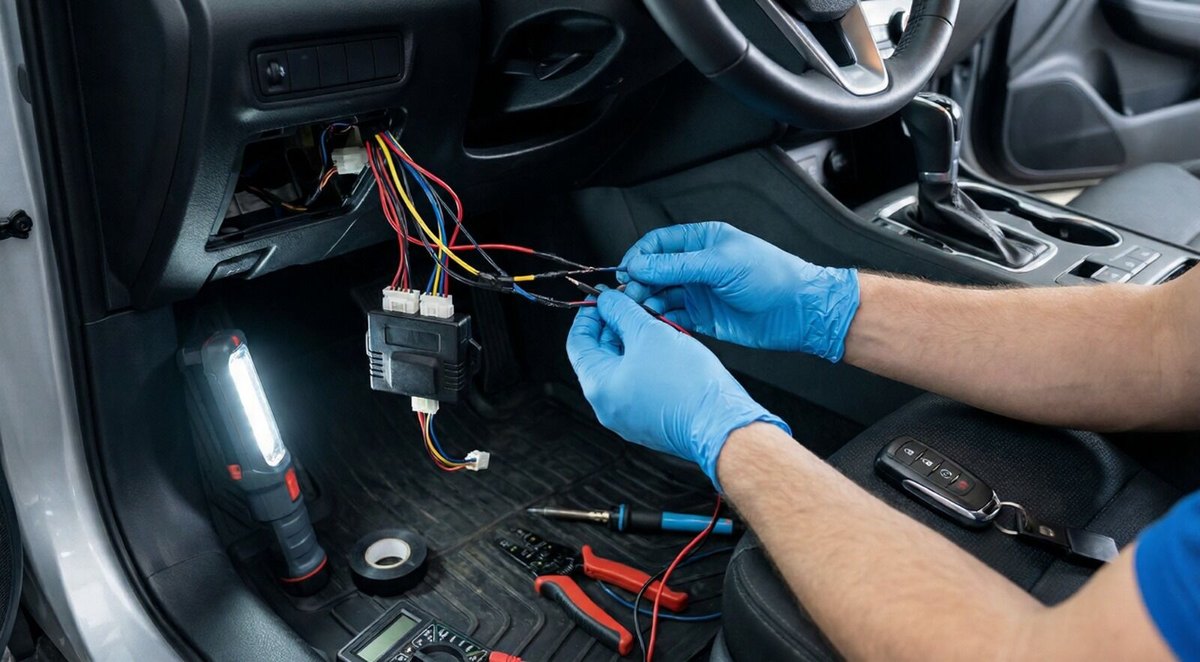
Even when the hardware holds up, the install is where the cheap-unit gamble shows its teeth. Modern vehicles run almost everything across the CAN bus, which means a head unit needs the right adapter to talk to the steering-wheel controls, the parking sensors, the climate display, and the door chimes. Skip that adapter, or buy a generic one, and you end up with a stereo that boots cleanly and breaks the rest of the dashboard.
We see it constantly. The customer saved $80 on the unit and now needs $200 in adapters, a new wiring harness, and an hour of diagnostic time to figure out why the reverse beep stopped working. The math on the “deal” is upside down before they’ve driven off the lot.
What we tell customers before they buy
After enough of these conversations, the advice has crystallized into a short version. Don’t buy from a storefront you can’t identify the company behind. Don’t trust spec numbers without an exact chipset model. Don’t assume CarPlay support means licensed CarPlay support. And don’t buy a unit without confirming the correct adapter exists for your vehicle’s exact year and trim. That last one alone saves more headaches than any other piece of advice. The cost difference between the bottom of the market and the middle is small. The difference in how long the unit lasts is enormous.
What a good purchase looks like
The Android upgrade itself is one of the best dollar-for-dollar improvements you can make to an older vehicle. Modern interface, real navigation, phone integration, dash-cam input, even backup-camera support — done right, it pulls a 10-year-old truck into the current decade. The hardware exists at every price point. The question is whether the seller is going to stand behind what they shipped, and whether the unit you receive matches the unit they advertised.
In practice that usually means moving up out of the bottom tier of the market. The jump from $150 to $400 buys you better build quality, real chipsets, proper licensing, and — critically — a company that still exists when you need help. It’s the single most important variable, and it’s the one the listing photos can’t show you.
The takeaway
The Android head unit market isn’t broken. It’s just structured to favor the seller, not the buyer. Once you understand that the listing is marketing and the support is theoretical at the bottom end, the path forward is clear: spend a little more, buy from someone with a name on the door, and confirm fitment before you click. Do that, and the upgrade stops being a gamble and starts being one of the best things you’ve done to your vehicle in years.