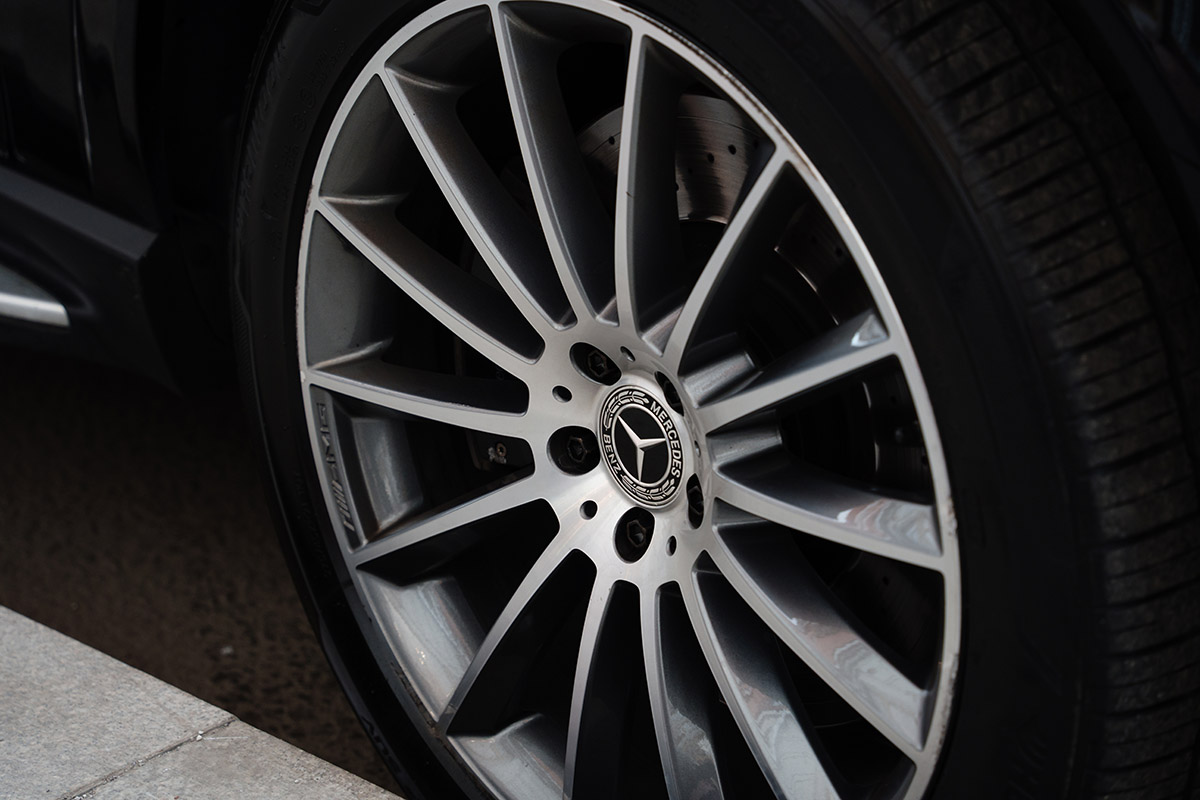

Wheel components tend to get attention for their design, not their failure rate. But a 2025 recall issued by Mercedes-Benz shows how quickly that can change when even a minor part doesn’t hold up under pressure. In this case, it wasn’t the rim or tire that triggered the alert—but the insert attached to the wheel’s face.
That insert came loose. And at highway speeds, it became a hazard.
The recall only affected four vehicles in the U.S., but the underlying problem points to larger concerns: how rims are made, how small variations in casting can create risk, and why car owners shouldn’t ignore anything connected to the wheel.
In this article:
Summary of the Recall
Mercedes-Benz notified the National Highway Traffic Safety Administration (NHTSA) in March 2025 that certain 2023 EQE 350 and EQE 350+ SUVs may have been equipped with rims whose inserts could fall off during normal use. The inserts—small trim pieces embedded into the wheel face—were not secured with enough force during production.
- Affected models: EQE 350 4MATIC and EQE 350+
- Build dates: May 23 to October 31, 2023
- U.S. vehicles involved: 4
- Risk: Insert detaches and becomes a road hazard
- Resolution: Free inspection and replacement of inserts through dealerships
The issue was discovered during routine Mercedes testing in August 2024. The company took steps to correct the casting problem in production, but a few vehicles with potentially faulty wheels were already delivered to U.S. customers.
Why Insert Detachment Poses a Road Risk
It’s not the size or weight of the insert that creates danger—it’s the way it detaches.
At speed, even a lightweight plastic or aluminum piece can become airborne and cause other drivers to swerve, brake, or get hit by debris. On city streets, it can strike pedestrians or cyclists. On highways, it may go unnoticed until it hits someone’s windshield.
Insert failures can also:
- Disrupt wheel balance
- Cause valve stem or sensor exposure if protective design features are lost
- Add vibration or noise under certain driving conditions
Even when the part isn’t structural, it still connects to the most active rotating component on a vehicle. That’s reason enough to address it.
Not an Isolated Case
Several manufacturers have issued wheel-related recalls in the past two years. Each one highlights different types of risk tied to wheel components—whether it’s the rim, the lug, or a trim element.
Examples include:
- Subaru Forester (2025): Over 20,000 units were recalled because of improperly cast lug seats, which could cause wheels to loosen under normal driving pressure.
- Porsche 718 and 911 (UK): High-performance center-locking wheels had retention issues, which prompted, Porsche to advise some owners not to drive their vehicles until the fix was complete.
- Tesla Cybertruck (2024–2025): A trim panel near the wheel arch had a tendency to detach, potentially hitting vehicles behind. More than 46,000 vehicles were recalled.
None of these recalls were about tire blowouts or cracked rims. They were about secondary components failing in real-world conditions.
What Causes This Type of Failure
The Mercedes issue didn’t stem from a bad part or outside damage. It came from a subtle variation during manufacturing. That’s not uncommon.
Here are the most frequent causes of wheel component recalls:
- Casting inconsistencies that affect fitment or tension
- Assembly line deviations, where torque values or press fits fall outside spec
- Material changes mid-production that introduce durability issues
- Incorrect replacement parts used during repairs or refits
In this case, Mercedes engineers noticed that retention force on some inserts didn’t meet internal expectations. That alone triggered additional testing and led to the recall.
What Owners of the EQE Should Do
Only four vehicles in the U.S. were affected, but anyone driving a 2023 EQE SUV can verify whether they’re included in the recall by:
- Checking the vehicle’s VIN at nhtsa.gov/recalls
- Calling a Mercedes-Benz dealer and requesting a lookup
- Reviewing any letters or emails sent by Mercedes in April 2025
Dealers will inspect the wheels and replace the inserts if needed. There’s no charge, and no other parts need to be replaced unless damage has already occurred.
Why It Pays to Check Wheels Between Services
If you drive a newer vehicle, especially one with custom alloy wheels or cosmetic rim features, it’s worth taking a moment during regular maintenance to inspect the wheel face.
Here’s what to look for:
- Loose or uneven inserts
- Rattling or vibration while driving
- Missing center caps or fasteners
- New scuff marks or gaps where a trim piece may have shifted
Not all insert issues are tied to recalls. Some develop after tire rotations, wheel swaps, or minor curb impacts. The earlier it’s caught, the easier it is to fix.
How Recalls Like This Reach the Public
When a manufacturer identifies a safety defect, they have to submit detailed information to the NHTSA. That includes:
- Vehicle production ranges
- Root cause analysis
- Risk assessment
- Corrective action plan
- Owner notification schedule
Once accepted, the recall is added to the public NHTSA database. Car owners may then receive a mailed notice, but that’s not guaranteed if the vehicle was resold or registered under a new address. For that reason, it’s smart to check your VIN online once or twice a year.
What This Means for the Industry
The EQE recall shows how thin the line can be between high-end manufacturing and safety failure. In this case, a trim insert created the problem. But what if it had been a sensor bracket? Or a wheel bolt with a misaligned thread?
Vehicle safety depends on precision. That includes not just the braking system or engine control unit, but the fitment of every component exposed to stress and rotation.
As electric vehicles grow more complex—and quieter—small part failures may go unnoticed longer. That makes recalls like this one even more relevant for new vehicle owners and wheel specialists alike.
Staying Ahead of Small Failures Before They Escalate
Whether you’re servicing alloy wheels, buying a new vehicle, or sourcing parts, pay close attention to components that lock into the wheel assembly.
A few reminders:
- Fit and finish affect more than just looks
- Trim or cap detachment may lead to balance problems or on-road hazards
- Manufacturers track even minor test failures to prevent long-term risk
- You don’t need to wait for a recall to fix a missing or loose insert
Remember, there’s no margin for error on the one part of your vehicle that never stops moving—and no substitute for experience when it comes to keeping it right.
Stockton Wheel has been building, repairing, and customizing wheels for over 124 years. If you need help inspecting or replacing a wheel component, we’re here to make sure it’s done right.